.webp)




Open-world games have evolved far beyond simple exploration. Today’s top titles are built around a carefully designed reward loop that keeps players engaged for hundreds of hours. From subtle environmental storytelling to complex upgrade systems, these games transform every action into meaningful progress. But many players miss the deeper structure behind this design, wandering without direction and feeling overwhelmed.
This article explores a specific issue found in many top games: how to navigate and optimize the “reward odyssey”—the journey where exploration, combat, and progression systems intertwine. Instead of general discussion, this guide breaks down how players can approach modern open-world games strategically, ensuring that every step contributes to long-term success.
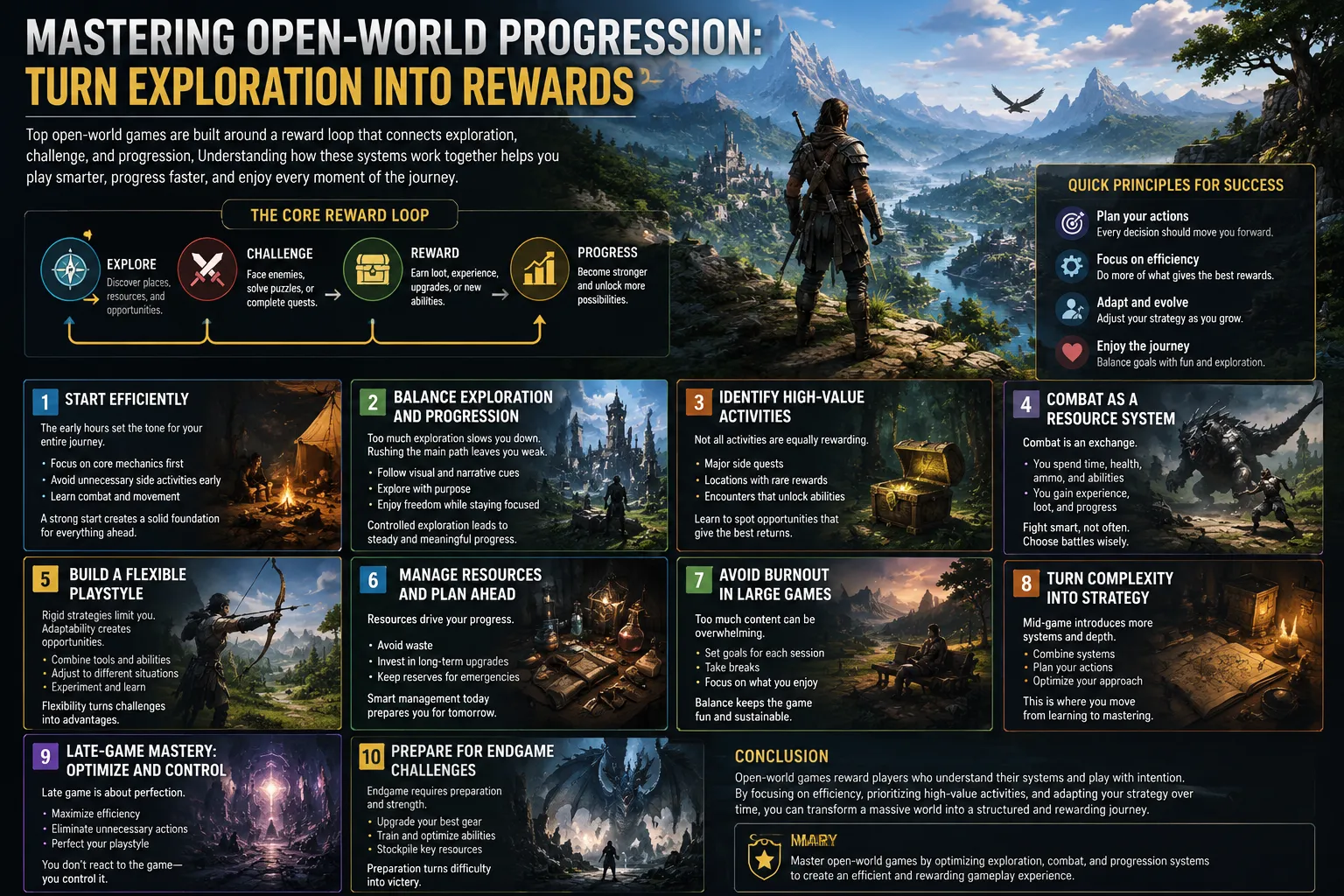
Understanding the Core Reward Loop
At the heart of every successful open-world game is a reward loop. This loop connects exploration, challenge, and progression into a continuous cycle that drives player motivation.
When you explore, you discover resources or encounters. These lead to challenges—combat, puzzles, or missions—which then reward you with upgrades, experience, or new opportunities. The key is recognizing that these systems are not random. They are intentionally designed to guide your behavior.
Players who understand this loop can avoid inefficient gameplay. Instead of aimless wandering, they focus on actions that generate meaningful rewards.
How to Start Efficiently Without Overwhelming Yourself
The early hours of any large game can feel chaotic. You are introduced to multiple systems at once, and it is easy to lose focus.
The best approach is to simplify your priorities:
- Focus on core mechanics first
- Avoid unnecessary side activities early
- Build a basic understanding of combat and movement
By narrowing your focus, you create a stable foundation. Once the basics become natural, you can gradually expand your activities without feeling overwhelmed.
Exploration vs Progression: Finding the Balance
One of the biggest challenges in open-world games is balancing exploration with structured progression. Too much exploration can slow down your growth, while rushing the main path can leave you underprepared.
The key is controlled exploration. Instead of exploring randomly, follow visual or narrative cues. Landmarks, quests, and environmental hints often lead to meaningful rewards.
This approach allows you to enjoy the freedom of exploration while still maintaining efficient progress.
How to Identify High-Value Activities
Not all activities are equally valuable. Some provide significant rewards, while others are designed mainly for immersion.
High-value activities often include:
- Major side quests with unique rewards
- Locations tied to upgrades or rare items
- Encounters that unlock new abilities
Learning to recognize these opportunities helps you prioritize effectively. Over time, you develop an instinct for what is worth your time.
Combat as a Resource System
In many modern games, combat is not just about defeating enemies—it is a resource exchange.
You spend:
- Time
- Health
- Ammunition or abilities
In return, you gain:
- Experience
- Loot
- Progress
Efficient players treat combat strategically. They avoid unnecessary fights and focus on encounters that provide meaningful rewards. This mindset turns combat into a calculated decision rather than a reflex.
How to Build a Flexible Playstyle
Rigid playstyles often limit your effectiveness. Top games are designed to reward adaptability.
Instead of focusing on a single approach, develop a flexible system:
- Combine different abilities or tools
- Adjust your strategy based on the situation
- Experiment with new mechanics
Flexibility allows you to respond to unexpected challenges and take advantage of diverse opportunities.
Resource Management and Long-Term Planning
Resources are the backbone of progression. Whether it is currency, crafting materials, or upgrade points, managing them wisely is essential.
Key principles include:
- Avoid wasting resources on short-term gains
- Invest in upgrades that provide lasting benefits
- Maintain a reserve for unexpected situations
Long-term planning ensures that you remain prepared for future challenges.
How to Avoid Burnout in Large Games
One of the hidden issues in open-world games is burnout. With so much content available, players can feel pressured to do everything.
To avoid this:
- Set clear goals for each session
- Take breaks between major objectives
- Focus on activities you enjoy
Maintaining balance keeps the experience enjoyable and sustainable.
Mid-Game Complexity: Turning Systems into Strategy
As you progress, the game introduces more systems and mechanics. What once felt simple becomes layered and complex.
This is where strategy becomes essential. You begin to:
- Combine multiple systems for efficiency
- Plan actions in advance
- Optimize your approach
The mid-game is the transition from learning to mastering.
Late-Game Mastery: Optimization and Control
In the late game, the focus shifts from progression to optimization. You already understand the systems—now you refine them.
This involves:
- Maximizing efficiency
- Eliminating unnecessary actions
- Perfecting your playstyle
At this stage, every decision is deliberate. You are no longer reacting to the game—you are controlling it.
Conclusion
The journey through a top-tier open-world game is not just about exploration—it is about understanding how every system connects. The reward odyssey is a carefully designed path that transforms your actions into progress, but only if you approach it with intention.
By focusing on efficiency, prioritizing high-value activities, and adapting your strategy over time, you can turn a potentially overwhelming experience into a structured and rewarding journey. Each stage of the game builds upon the last, guiding you from beginner to master.
In the end, success is not about doing everything—it is about doing the right things at the right time. Master the system, and the world opens itself to you.