The Illusion of Physicality: Deconstructing Server Prediction, Collision Desync, and Goalkeeper Magnetism in Rematch
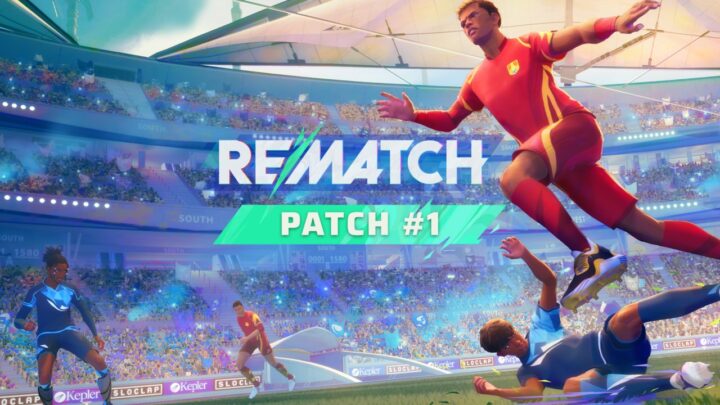
When Sloclap released Rematch in June 2025, it promised a revolutionary blend of third-person action combat and arcade street football. Leveraging the fluid animation systems and precise melee physics perfected in Absolver and Sifu, the developer set out to replace the abstracted, stats-driven simulations of traditional sports titles like EA Sports FC with direct, skill-based physical control. In Rematch, every pass, tackle, and strike is determined by real-time spatial positioning, collision hitboxes, and momentum. However, translating the tight, deterministic mechanics of single-player martial arts or small-scale brawlers into an online 5v5 multiplayer environment exposed a critical systemic issue: the breakdown of mechanical fairness due to server prediction, hurtbox desynchronization, and automated goalkeeper magnetism.
In a sports game built on combat-gameplay fundamentals, visual clarity and physical feedback are the non-negotiable bedrock of competitive integrity. When a player executes a slide tackle or dives to catch a ball, the client expect immediate, physically consistent feedback. In Rematch, the complex interaction between Unreal Engine 5's physical constraints and online netcode creates a recurring tension between what the player sees on screen and what the authoritative server calculates. This deep dive explores how network latency mitigation, dynamic animation cancels, and automated safety nets erode player agency, turning what should be a pure test of spatial skill into a unpredictable battle against the game's underlying physics engine.
1. The Inherited DNA: Bringing Combat Physics to the Arena
Sloclap’s decision to build a football title on top of a melee brawler engine was both an ambitious innovation and the origin of its deepest mechanical challenges. In Sifu, physical impacts felt tangible because hitboxes and hurtboxes were calculated locally with minimal frame latency. When translating this system to Rematch, the developers replaced martial arts strikes with ball touches, slide tackles, and body checks.
The core game loop relies on close-quarters interactions. A defender does not press a button to roll a dice check against an opponent's dribbling stat; instead, the defender must physical extend their leg into the trajectory of the ball or the runner's hurtbox. This design philosophy demands sub-millisecond precision. In offline development environments, this system provided an unmatched sense of physicality and weight. However, once deployed across global server networks, the absolute precision required by melee-style hitboxes instantly collided with the realities of network latency, packet loss, and rollback prediction.
2. Server Reconciliation and the Phantom Tackle Anomaly
The most frequent mechanical failure in high-level Rematch play occurs during slide tackles and interception attempts. Because online multiplayer games cannot wait for server confirmation before displaying player inputs, the client-side engine uses predictive lag compensation. When a defending player initiates a tackle, their local client renders the leg connecting cleanly with the ball.
However, if the ball-handler executes a direction change or dribble skill on their own screen, the server reconciles the two conflicting actions by prioritizing the ball-handler's evasive move. To the defending player, the result is the "Phantom Tackle"—a visually perfect leg sweep that passes straight through the ball or opponent without registering contact. This creates a widespread, erroneous perception among the community that certain dribble animations possess invulnerability frames ("i-frames"), when in reality, the issue stems entirely from server-side hurtbox shrinking during possession transitions.
Factors Amplifying Rollback Desync
- Instantaneous Hurtbox Shrinking: The moment a ball-handler releases a pass or initiates a dribble move, their hurtbox instantly snaps down around the ball, invalidating active tackles already in progress.
- Tackle Assist Redirection: Built-in aim assistance for tackles frequently overrides intentional player positioning, pulling defenders toward obsolete server positions rather than where the opponent is actually heading.
- Client-Server Animation Truncation: High-ping reconciliation forces the server to retroactively cancel local animations, causing players to visually teleport or snap into failed states mid-action.
3. Goalkeeper Magnetism: The Automated Safety Net
To prevent matches from turning into high-scoring blowouts, Sloclap implemented a hybrid control system for goalkeepers, blending manual positioning with automated catch magnets. Within the penalty box, a player controlling the keeper enters a specialized defensive stance designed to automatically vacuum up shots aimed within a specific radius.
This design choice creates a severe rift in skill expression. At early launch, goalkeeper magnetism was so aggressive that leg-saves and defense stances automatically caught high-velocity shots without requiring precise timing. Instead of rewarding attackers for threading shots into open corners or forcing keepers to manually read ball trajectories, the game relied on algorithm-driven snapping mechanics. This stripped 1v1 breakaway scenarios of their physical authenticity, turning direct shots into deterministic catches regardless of execution.
4. The Netcode Dilemma in the Penalty Box
The friction between server prediction and manual action reaches its breaking point inside the six-yard box. Goalkeeper dives require exact timing to intercept fast-moving projectiles. When latency enters the equation, the visual feedback loop collapses entirely.
Goalkeeper Synchronization States
- The Teleport Catch: On a keeper's high-ping client, they dive and secure the ball cleanly; on the striker's screen, the ball visibly enters the net before warping backward into the keeper's hands half a second later.
- The Phantom Ghosting: A keeper initiates a dive on time, but server prediction cancels the animation mid-frame because the attacker's shot command was received milliseconds earlier, resulting in the ball passing through an idle keeper.
- Out-of-Box Sweeping Overpower: Goalkeepers sliding outside the penalty area retain unnaturally wide collision boxes, allowing them to clear attacks with low physical risk.
5. Stamina Depletion and the Erosion of Physical Consequence
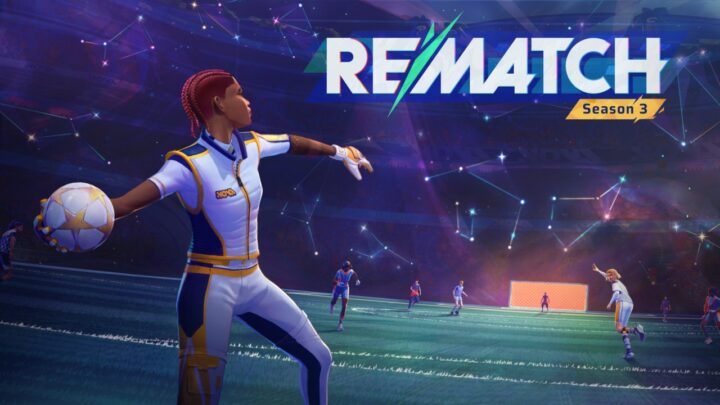
In an action game built on precise movement, resource management serves as a crucial balancing lever. Rematch features a dedicated stamina meter that drains when sprinting, applying "Extra Effort," executing tackles, or stringing together dribble chains. The structural intention was clear: players who waste stamina should suffer physical penalties in speed, reaction time, and touch quality.
In practice, the game's early balance failed to enforce these penalties effectively. Players discovered that running on empty stamina had virtually no impact on complex dribble skill mechanics or defensive tackle reach. A exhausted attacker could still execute infinite dribble chains and sharp 180-degree cuts with near-identical frame data to a fully rested player. By failing to link stamina depletion to physical animation delays or reduced ball control precision, the game rewarded mindless, non-stop pressing over tactical spacing and energy preservation.
6. The Dribble Chain Paradox and Infinite Possession
One of the most polarising elements of the Rematch meta is the discovery of "Infinite Dribble Chains". By precisely timing touches to match the exact frame the ball meets the player's foot, advanced players can maintain continuous, unbreakable possession while maneuvering through entire teams.
"When execution rhythm completely overrides environmental physics, a sports simulator ceases to be about spatial positioning and becomes a rhythm game played inside an arena."
While this offers a high skill ceiling for dedicated players, it severely disrupts the core football fantasy. Because the ball stays artificially glued to the dribbler's feet during these chained inputs, defending players find it almost impossible to execute clean physical tackles without triggering fouls or missing entirely due to hurtbox snapping. The mechanical emphasis shifts from team passing and off-ball movement to isolated, arcade-style trick chains that break the game's grounded aesthetic.
7. Environmental Geometry and the Arena Boundary Friction
Unlike traditional association football, Rematch takes place inside enclosed virtual reality arenas without throw-ins, out-of-bounds lines, or referee stoppages. The walls surrounding the pitch are fully interactive, allowing players to bounce passes off geometry or launch wall-assisted aerial plays.
Architectural Physics Vulnerabilities
- Corner Pinning: Aggressive teams can trap defenders against seamless curved wall corners, exploiting physics engine collision stacking to steal possession automatically.
- Camera Occlusion: Third-person camera angles frequently clip through solid arena boundary walls during close-quarters wall battles, blinding defenders at critical moments.
- Unpredictable Rebounds: High-speed shots striking wall corners occasionally calculate rebound vectors with unnatural velocity spikes, bypassing defensive structures through physics glitches.
8. Sloclap’s Iterative Paradigm: Patching the Mechanical Foundation
Recognizing that server desync and automated mechanics were undermining player trust, Sloclap began rolling out substantial core gameplay overhauls through post-launch developer updates. The developer acknowledged that prioritizing automated visual catch animations over physical simulation was a fundamental misstep.
Core Mechanical Reworks Implemented Post-Launch
- Deflection Over Automation: Goalkeepers were re-engineered to deflect close-range shots rather than automatically catching them, turning dead-ball catches into live rebound scrambles.
- Hurtbox Normalization: Overhauled the instant-shrink hurtbox parameters during dribbles to ensure slide tackles make physical contact based on visual alignment.
- Stamina Impact Integration: Applied heavy mechanical penalties to low-stamina dribble speeds and tackle recovery frames to discourage mindless sprint spamming.
9. The Social Dilemma: High-Level Spacing vs. Low-Level Ball Chasing
The underlying physics and netcode issues are further exacerbated by how the player base approaches the game's tactical structure. In casual and mid-tier ranked play, Rematch often devolves into chaotic "ball chasing," where all four outfield players swarm the ball simultaneously without maintaining field spacing or defensive coverage.
Because players lack patience and constantly force forward momentum, the game engine is subjected to maximum collision congestion in localized areas. When six or seven ragdoll-adjacent hitboxes, tackle inputs, and ball touches occur within a tiny radius, the server's prediction algorithms suffer catastrophic desync. Conversely, high-tier play prioritizes resetting possession, wide passing lanes, and structured defensive zones—demonstrating that the game's physics operate infinitely better when players respect spatial geometry rather than forcing chaotic scrums.
10. Conclusion: The Long Road to Pure Physical Integrity
Rematch remains a groundbreaking experiment in bringing action-game mechanics, combat precision, and third-person agency to the sports genre. Sloclap’s ambitious vision proved that arcade football can offer deep, thrilling skill expression beyond simple menu-driven commands. However, its ongoing struggle with server prediction, phantom tackles, and goalkeeper magnetism reveals the inherent difficulty of running precise, melee-style physics over an online network.
The ultimate survival of Rematch as a legitimate competitive e-sport depends on Sloclap's continued commitment to prioritizing physical integrity over automated hand-holding. By stripping away magnetic catches, fixing hurtbox desynchronization, and forcing players to respect physical consequences like stamina and spacing, the game can finally fulfill its original promise: a pitch where every goal, save, and tackle is determined strictly by the absolute purity of skill, geometry, and human reaction.
Rematch attempts to merge combat physics with street soccer, but server desync, broken hurtboxes, and keeper magnetism undermine its competitive fairness.